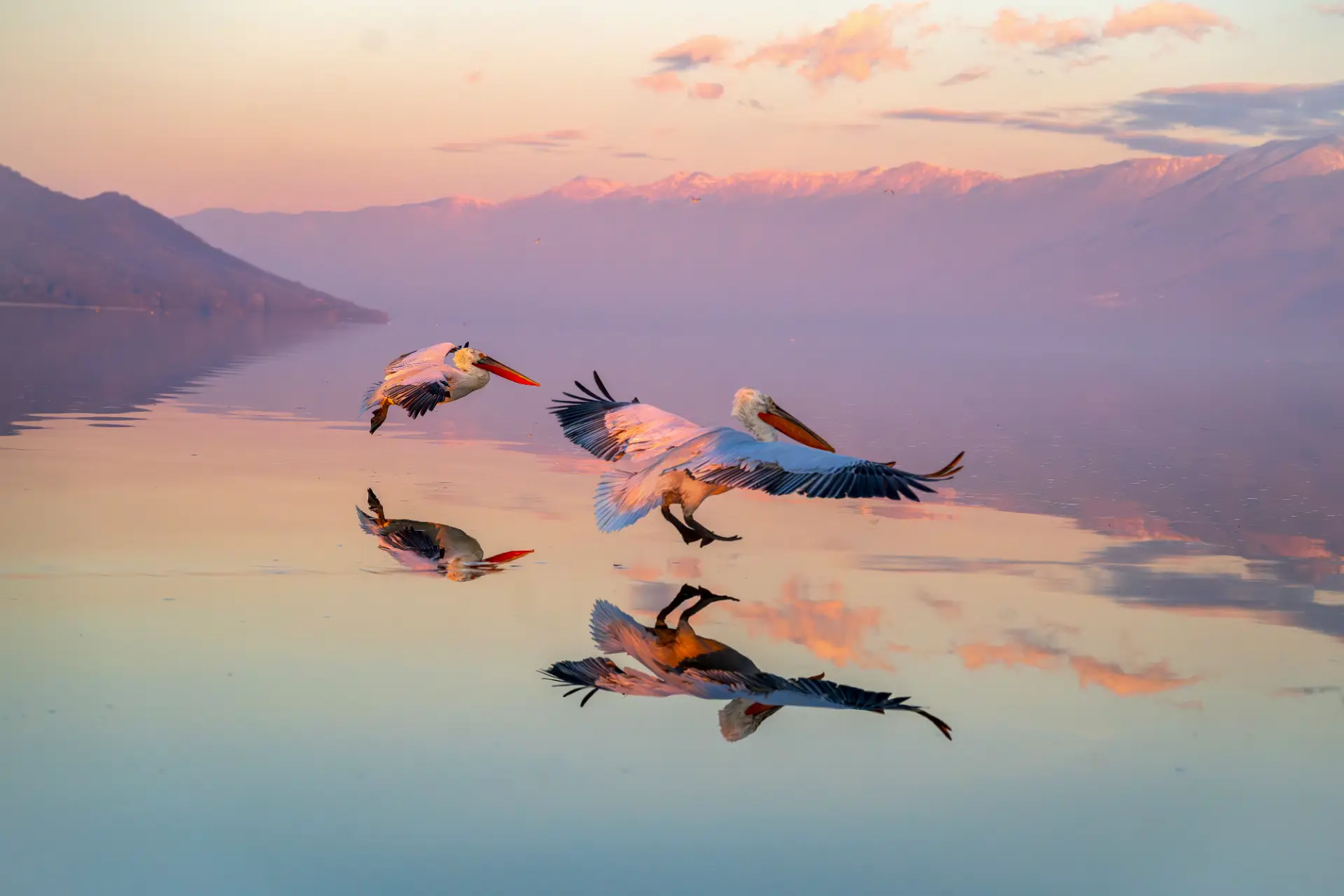
Seppo Tuomaala’s photograph Lake of Reflections was awarded first place in Grid Photo Gallery’s Animals 2026 contest. Captured at Lake Kerkini in Greece, the image follows Dalmatian pelicans gliding just above perfectly still water, their reflections extending beneath them as soft evening light washes across the lake and distant mountains.
Selected from an international field of submissions, the photograph stood out for its remarkable sense of balance, precise timing, and the almost dreamlike harmony it creates between wildlife and landscape. In this interview, Seppo speaks with us about the encounter behind Lake of Reflections, the technical challenges of photographing birds in flight, and the patience and observation that shape his approach to wildlife photography.
Q: Seppo, congratulations on winning Grid Photo Gallery’s Animals 2026 contest. To begin, could you tell us a little about yourself and how wildlife photography became part of your life?
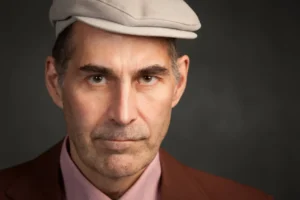
A: I got my first camera when I was 14 and became a keen nature photographer. Photography stayed an important part of my life until I began studying medicine, when it gradually had to take a back seat.
After completing my medical studies and specializing in ophthalmology, some changes in my life led me to pick up a camera again. Between 2013 and 2015, I studied photography at a vocational college and completed a degree in photography. At that time, my main interests were street and documentary photography.
During the Covid years, I found my way back to nature photography. Since then, most of my work has focused on wildlife and nature, alongside documentary projects. In a sense, wildlife photography has brought me back to where photography originally began for me.
“I could see the bigger picture quite naturally in my mind — not simply birds flying across the frame, but the whole scene and the story.”
Q: Lake of Reflections was created at Lake Kerkini in Greece. What brought you to this location, and what makes it such a compelling place for photographing Dalmatian pelicans?
A: Lake Kerkini is a very well-known destination for photographing Dalmatian pelicans during the winter months. I had the opportunity to visit as part of a photography trip organized by WildWatching Spain and led by the renowned nature photographer Antonio Liébana.
What makes the place so special is not only the birds themselves, but also the extraordinary light and the mountains surrounding the incredibly beautiful lake. Together, they create an atmosphere that makes Lake Kerkini much more than simply a good location for photographing pelicans.
Q: The photograph captures an extraordinary moment of calm, with the birds, mountains, sky, and reflections all becoming part of the same scene. What first caught your attention when this moment began to unfold?
A: I remember that evening very well. There was something interesting happening on the other side of the boat too, but I was completely fascinated by the soft evening light, the calm surface of the water and the mountains. I could hardly do anything but admire the scene.
When the pelicans appeared, I basically had two options. I had two cameras with me, one with a long telephoto lens and the other with the 24–120mm. These decisions happen almost automatically, but I immediately felt that the wider view was the right one. The beauty of the moment was in the whole scene, the soft light, the still water, the mountains, and then the pelicans and their reflections becoming part of it.
Q: The pelicans are flying extremely close to the surface, creating almost perfect mirrored forms beneath them. How did you anticipate their movement and position yourself to capture that relationship?
A: I positioned myself low in the boat to get as close as possible to the level of the water and the reflections. At the same time, I tried to keep the composition balanced by making sure I wasn’t cutting off the edges of the mountains on either side of the frame.
Then I took a series of images as the pelicans flew across the lake, hoping that one frame would bring all the elements together in the composition I had seen almost intuitively. I think this particular frame came very close to that.
Q: Beyond documenting the birds themselves, the image has a quiet, almost painterly quality. What atmosphere or emotion were you hoping the photograph would convey?
A: I was fascinated by the light, which reminded me of an old painting by Albert Edelfelt. As the sun was setting, the light became very soft as it travelled through the cold, humid air above the lake.
So I agree with the description of the image as painterly. In that kind of light, with the still water and the mountains in the background, the whole landscape became almost otherworldly. That was the atmosphere I wanted to preserve in the photograph.
Q: The balance between the two birds, their reflections, and the distant landscape feels especially precise. How much of your composition was anticipated, and how much depended on instinct in the moment?
A: As I mentioned earlier, in situations like this you have choices, but I was mainly fascinated by the serenity of the landscape. I could see the bigger picture quite naturally in my mind, not simply birds flying across the frame, but the whole scene and the story created by the light, the water, the mountains, the pelicans and their reflections.
Some of the composition was deliberate, of course, but the exact balance between the birds depended on instinct, timing and a little luck.
Q: You photographed the scene with a Nikon Z8 and a NIKKOR Z 24–120mm f/4 S. What made this combination particularly suitable for the image you wanted to create?
A: I love working with the Nikon Z8 because of its excellent autofocus, which is especially valuable when photographing birds in flight. For this kind of environmental wildlife image, I also find a versatile zoom very useful, because you never know exactly beforehand how you will want to frame the scene.
The 24–120mm gave me the flexibility to react quickly and include enough of the surrounding landscape rather than concentrating only on the birds.
Q: With the pelicans in flight, you used a shutter speed of 1/1600 second and ISO 2000. How did you balance the need to freeze movement with preserving the softness and atmosphere of the evening light?
A: My rule of thumb is that for larger birds, a shutter speed of around 1/1600 second works well. In a photograph like this, I did not want any motion blur in either the birds or their reflections.
With modern cameras, ISO 2000 is not really a problem, especially if you are careful not to underexpose the image. For me, it was more important to preserve the sharpness of the birds while still keeping the softness and atmosphere of the evening light.
Q: Wildlife photography often involves long periods of observation followed by very brief opportunities. What role do patience and knowledge of animal behavior play in the way you work?
A: Patience plays a very big role. Sometimes you spend days, or even weeks, waiting for a brief moment, and when it comes you have to know how to react. I have spent a lot of time in nature since childhood, so I feel very comfortable in that environment.
My background in photography is perhaps a little different from that of many nature photographers. I know something about animals and their behaviour, but I am not a biologist and I certainly cannot identify every bird. I am always keen to learn more.
Many wildlife photographers first develop a deep interest in nature and later add photography. I came to it with experience from several photographic genres, especially documentary and street photography. I use much of the same photographic skill set whether I am working on a documentary project or photographing wildlife: observing, anticipating, reacting quickly and trying to tell a story. In a way, I think that may be one of my strengths.
Q: What motivated you to submit Lake of Reflections to Grid Photo Gallery, and what did winning the Animals 2026 contest mean to you?
A: I had seen some of the previous contests and exhibitions organized by Grid Photo Gallery and was impressed by the quality of the photography. That made me see Grid as a serious platform, so I felt that Lake of Reflections was worth submitting.
Of course, I am very happy to have won. It is always encouraging when a photograph that means something to you also connects with other people.
“I am usually looking for something more — atmosphere, behaviour, light or a sense of place.”
Q: Through an online exhibition, this quiet encounter at Lake Kerkini can now be experienced by viewers around the world. What do you hope people take away from photographs that present wildlife as part of a wider landscape rather than in isolation?
A: That is an interesting question. Personally, I am most drawn to nature photographs that tell a broader story, especially when they show something of the animal’s habitat and its relationship with the environment.
There is a natural tendency in wildlife photography to use every millimetre available on your longest lens. Sometimes that is exactly the right choice, but often it can leave you with an isolated animal and very little context. I often find that working with light, composition and the surrounding landscape can produce a more interesting photograph.
Interaction between animals can of course be fascinating too, but a single bird sitting on a perch is rarely enough for me on its own. I am usually looking for something more—atmosphere, behaviour, light or a sense of place.
Q: Finally, what advice would you give photographers hoping to create more expressive wildlife images, and what places, species, or projects are you looking forward to exploring next?
A: I think I have already partly answered this in the previous question. My advice would be to experiment with different ways of seeing: change your perspective, work creatively with light and composition, and think about the whole scene rather than only the animal.
A very long and expensive telephoto lens is certainly not the only way to make a strong wildlife photograph. Sometimes stepping back and showing more of the environment can tell a much more interesting story.
As for what comes next, I am looking forward to exploring underwater photography in Malta and later photographing wildlife in the Falkland Islands. I also want to continue developing projects where nature photography and a more documentary way of seeing can meet.
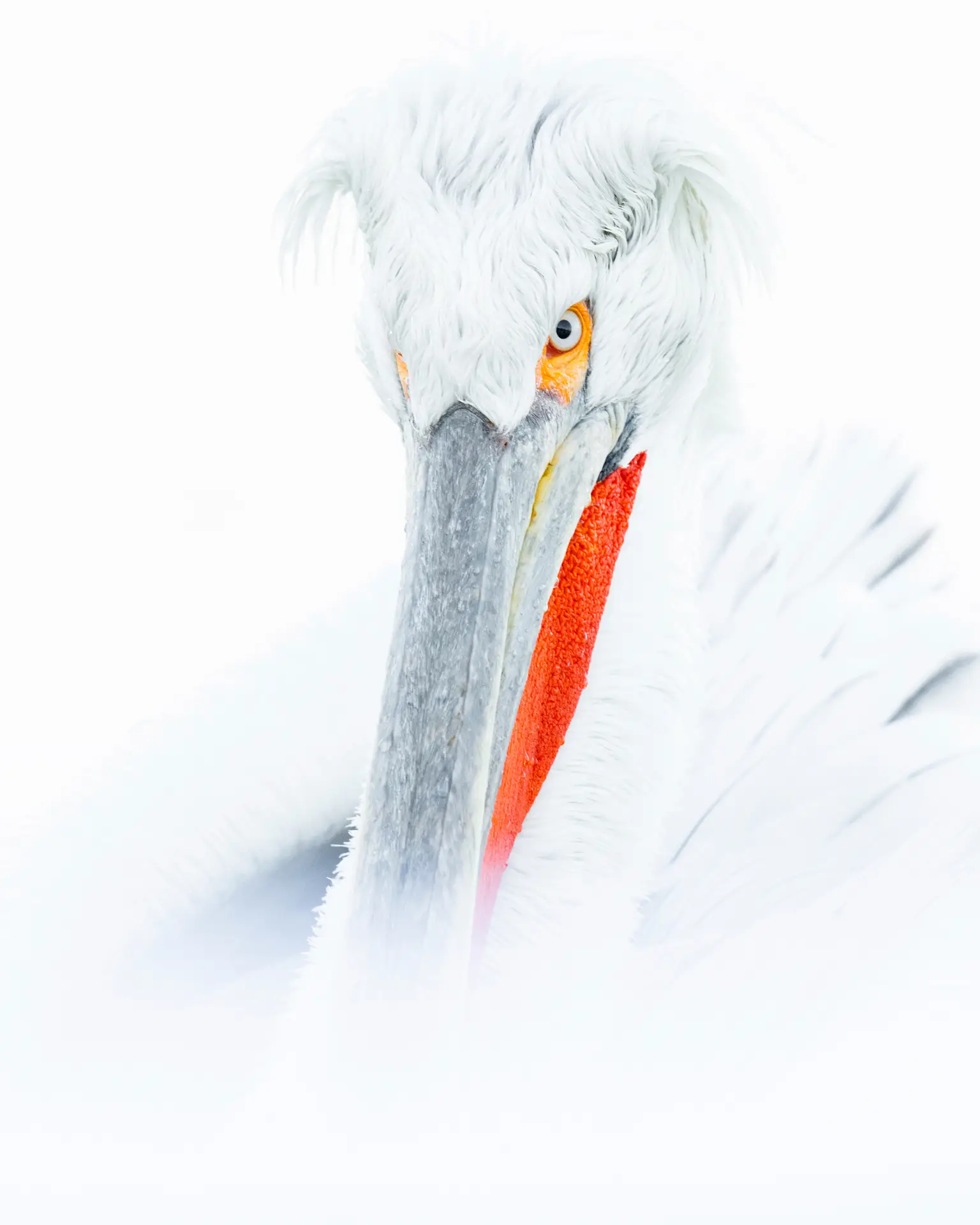
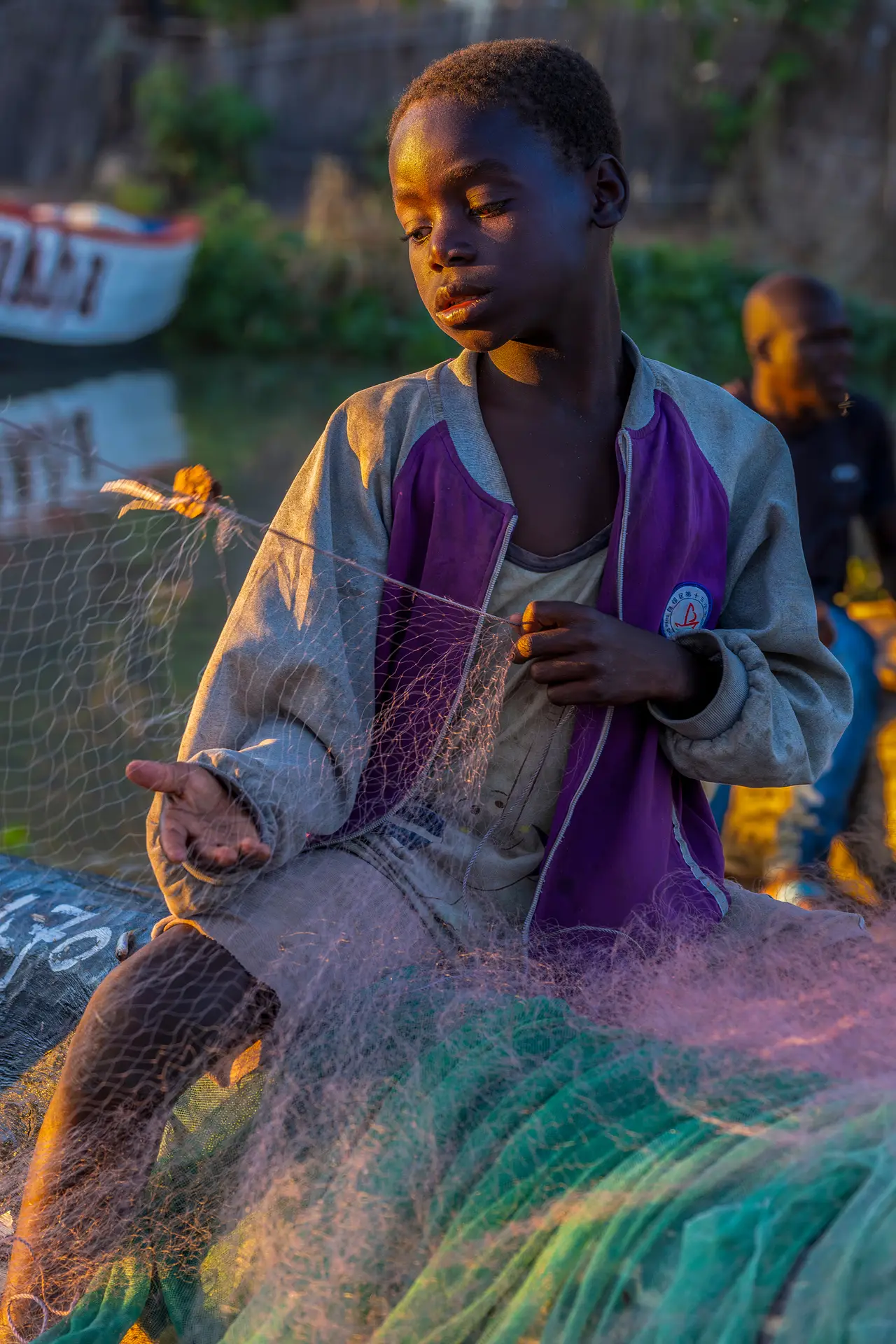
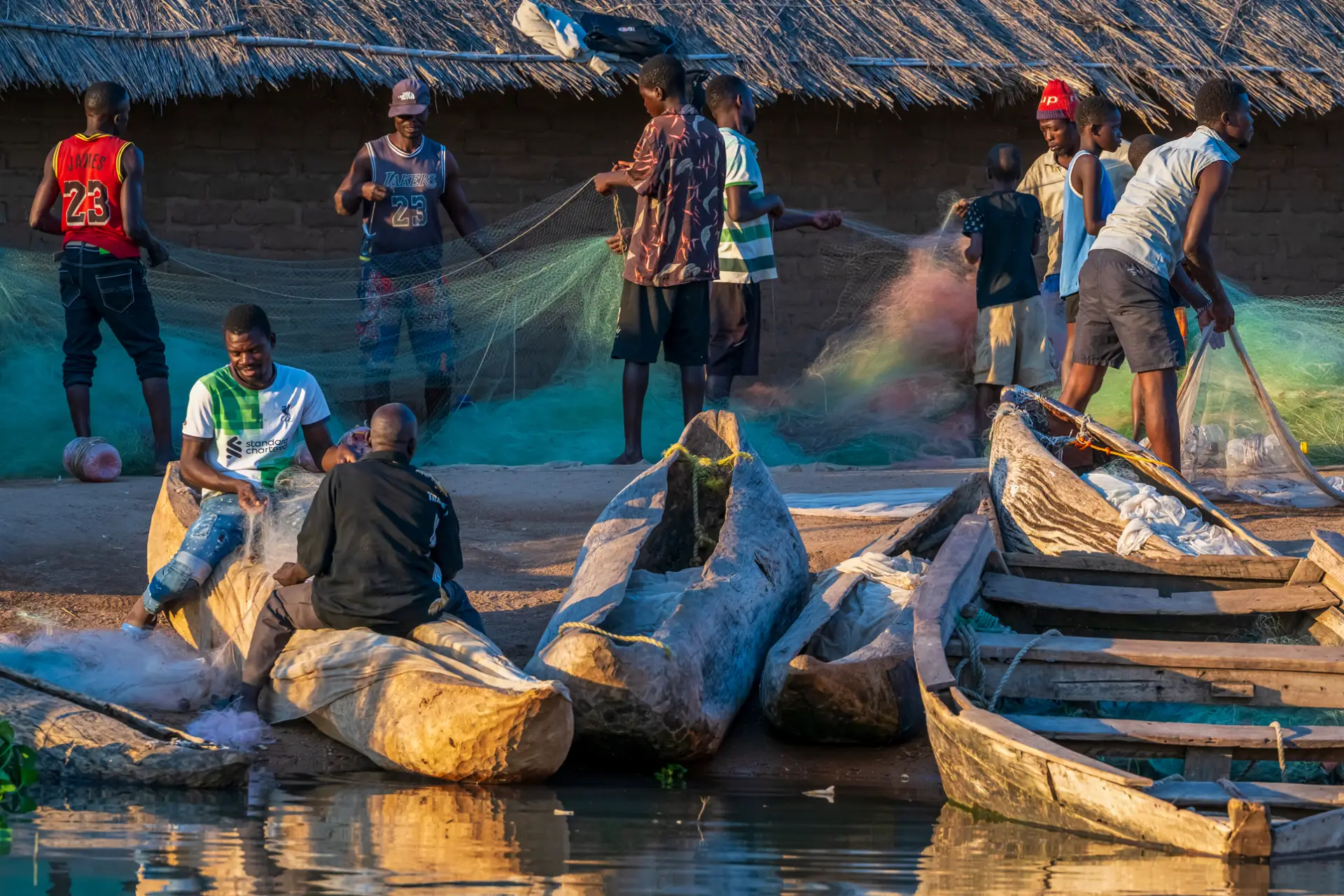
Some photographs by Seppo Tuomaala

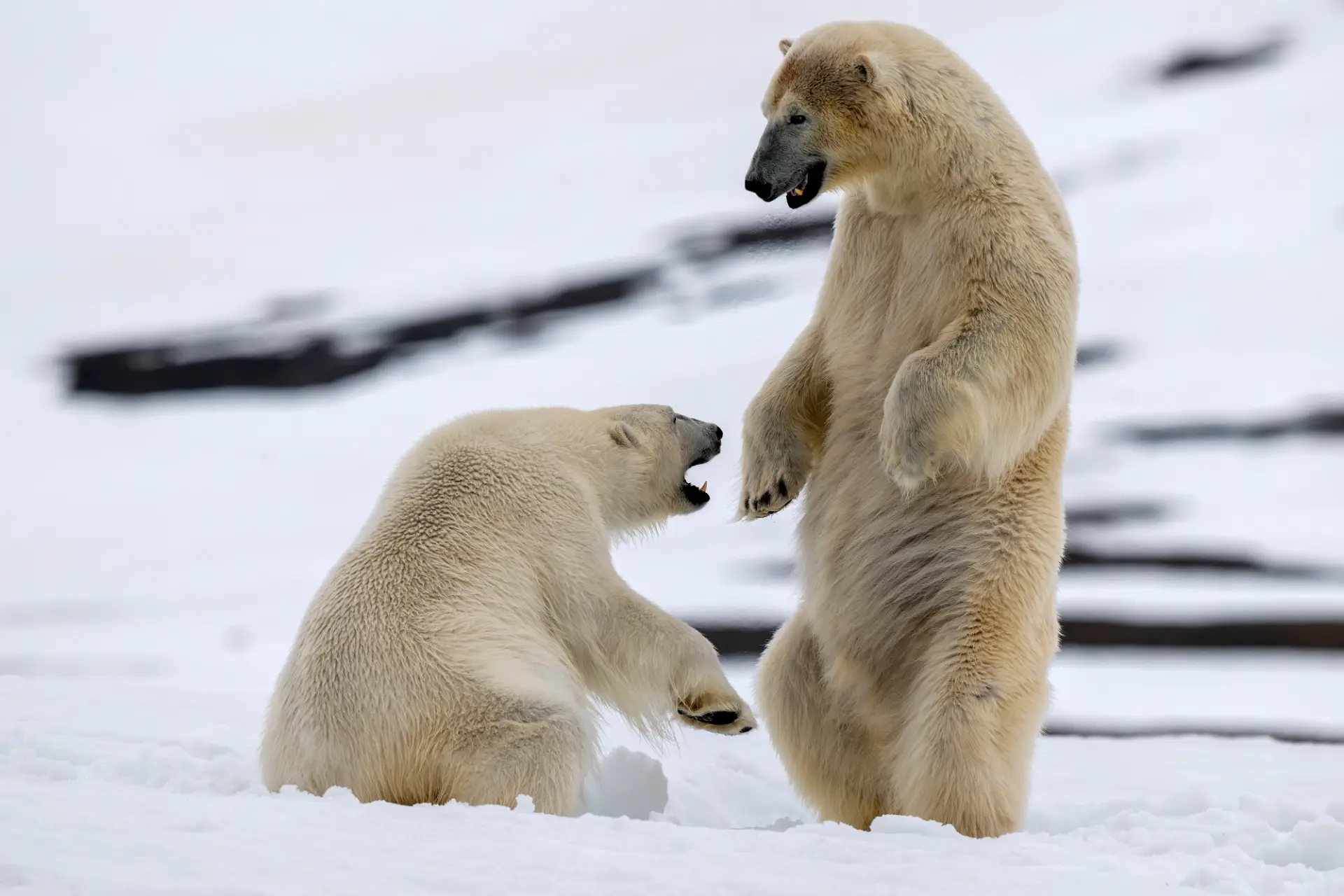
White Silence – Seppo Tuomaala – Lake Kerkini, Greece, 2026 Mending the Nets – Seppo Tuomaala – Lake Malawi, Malawi, June 2026 Harbour Work – Seppo Tuomaala – Lake Malawi, Malawi, June 2026