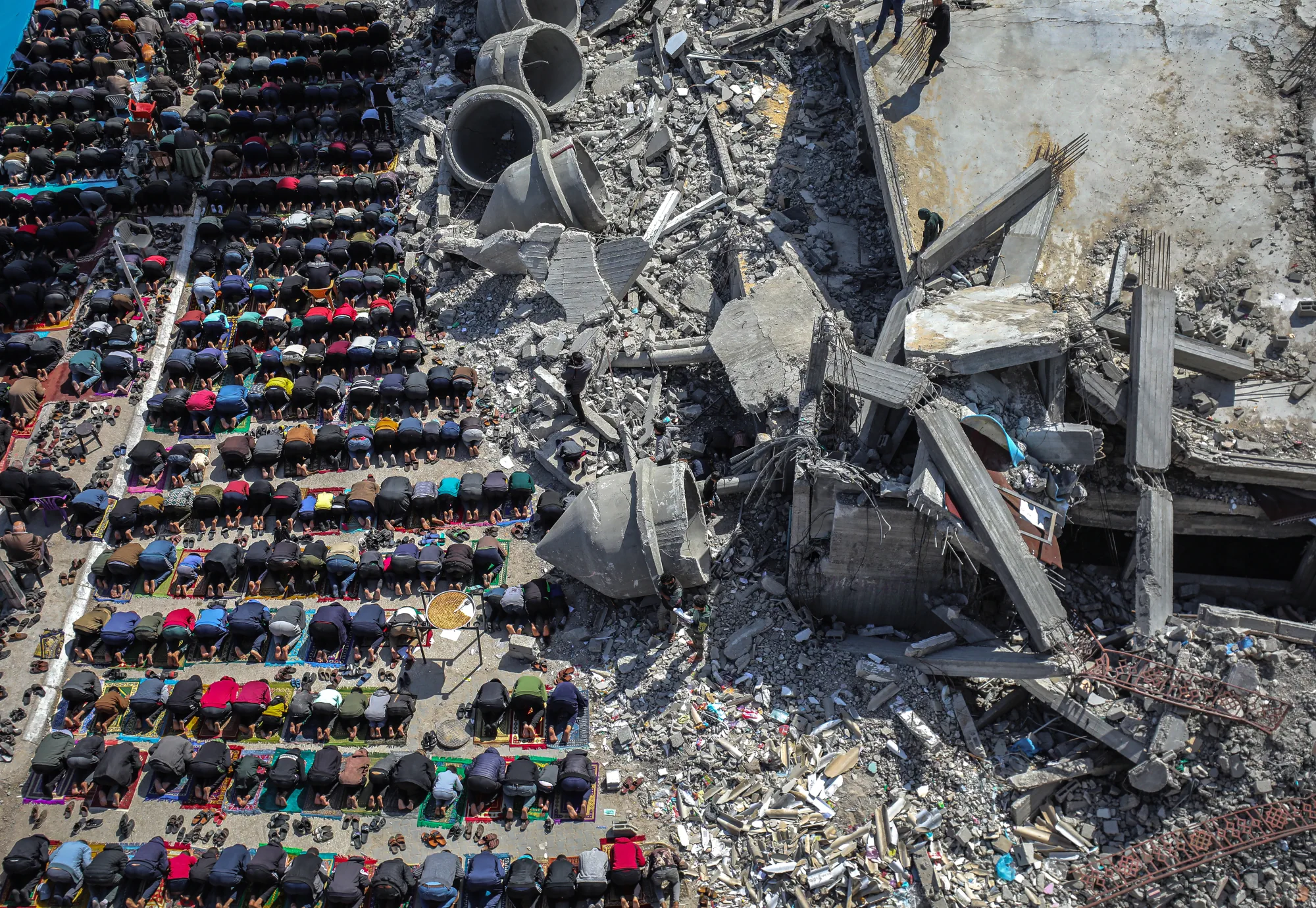
Abdelrahman Alkahlout’s photograph Faith Defying Ruins was awarded first place in Grid Photo Gallery’s People 2026. Seen from above, rows of displaced Palestinians gather in prayer amid the shattered remains of a mosque, their collective gesture forming a powerful counterpoint to the surrounding destruction.
Selected from an international pool of submissions, the image stood out for its striking composition, emotional intensity, and the clarity with which it conveys resilience, faith, and human dignity under extreme conditions.
In this interview, Abdelrahman speaks with us about the moment behind the photograph, the realities of working as a photojournalist in Gaza, and the deeper purpose that drives his work.
Q: Abdelrahman, congratulations on your win. To begin, could you tell us about your journey into photojournalism and what led you to document life in Gaza?
A: I began my journey in photojournalism during the 2014 war on Gaza. Being born and raised in Gaza meant I was never observing events from a distance; I was documenting the reality surrounding my own life and community. Over the years, photography became both a professional commitment and a human responsibility. My work focuses on preserving the visual testimony of war, displacement, and survival, while emphasizing the dignity and resilience of civilians living under extreme conditions. I believe photography has the power not only to inform, but also to preserve memory, encourage accountability, and create human connection across borders.
“I was not standing apart from the people in the photograph, I was one of them.”
Q: Faith Defying Ruins is a deeply moving image. How did you come upon this moment, and what compelled you to raise your camera?
A: At that moment, I was not standing apart from the people in the photograph, I was one of them. Like many families in Gaza, we were living through displacement, fear, and constant uncertainty after losing homes and any sense of safety. Airstrikes were continuous, and the feeling of danger never disappeared. In the middle of a world that seemed silent in the face of what was happening in Gaza, I witnessed displaced civilians gathering to pray among the ruins of a destroyed mosque.
Even places of worship had been reduced to rubble, yet the people challenged that destruction. They showed that faith does not depend on walls or buildings. What moved me deeply was the calm devotion in their prayer, as if, for a moment, spirituality had become their only refuge against fear and loss. Visually and emotionally, the scene carried a powerful contradiction between devastation and resilience. I felt compelled to document it, not only as a historical testimony, but as a message that human dignity and faith can continue to exist even above the ruins.
Q: The photograph presents a powerful contrast between devotion and devastation. What did this scene mean to you emotionally as you witnessed it?
A: Emotionally, the scene carried both pain and peace. Despite the destruction surrounding them, seeing people pray together with such calm and faith gave me a sense of inner stillness for a moment. It reminded me that even in the darkest circumstances, people in Gaza continue to hold onto dignity, hope, and spiritual strength.
Q: From an elevated perspective, the composition allows us to see both the scale of the destruction and the unity of the people. How did you approach framing this image?
A: I chose an elevated perspective to show both the scale of the destruction and the unity of the people within it. From above, the contrast became stronger: the chaos of the ruins surrounding rows of worshippers standing together in calm and order. I wanted the composition to guide the viewer through both realities at once, devastation and resilience. Visually, the repetition of the prayer lines created a sense of connection and collective strength, which became an essential part of the image’s meaning.
Q: There is a strong sense of rhythm in the rows of worshippers. What role did repetition and pattern play in how you visualized the photograph?
A: The repetition in the rows of worshippers created a strong visual rhythm that immediately drew my attention. In the middle of destruction and chaos, those organized lines brought a sense of unity, calm, and collective presence. Visually, the pattern helped guide the viewer’s eye through the image, while emotionally it reinforced the idea that people were standing together with shared faith and resilience despite everything surrounding them.
Q: You were working in extremely challenging and dangerous conditions. How do such environments shape your decision-making in the field?
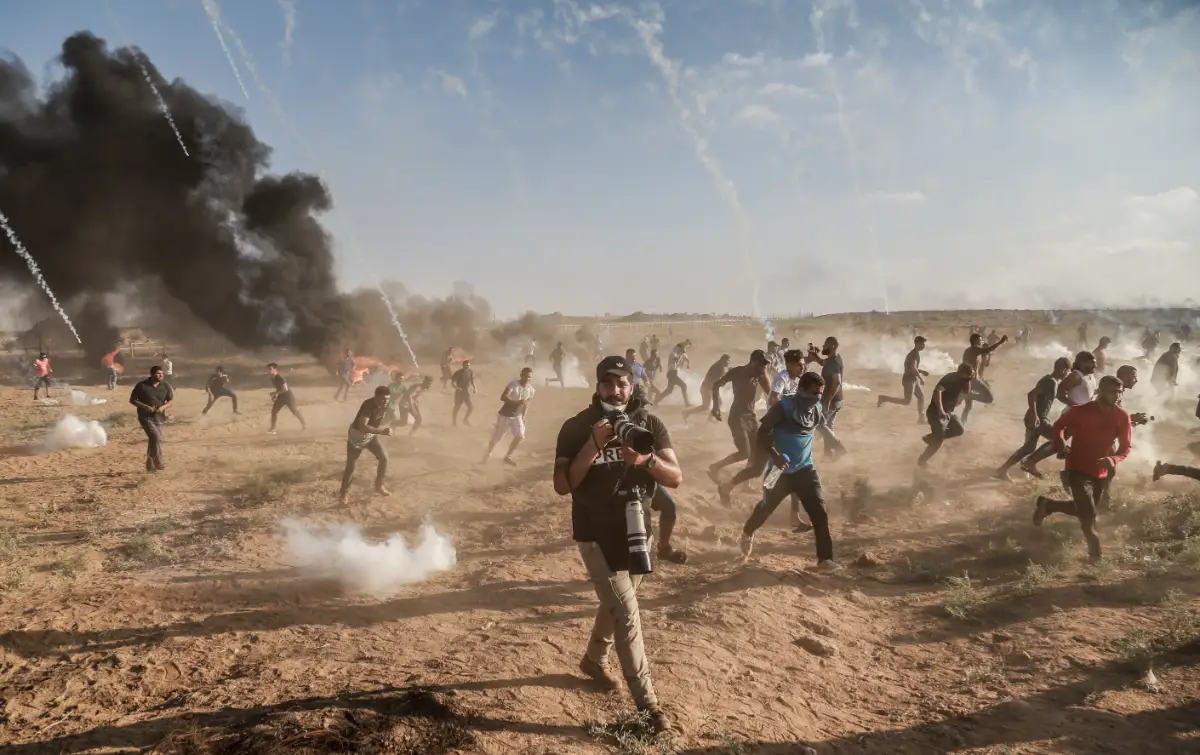
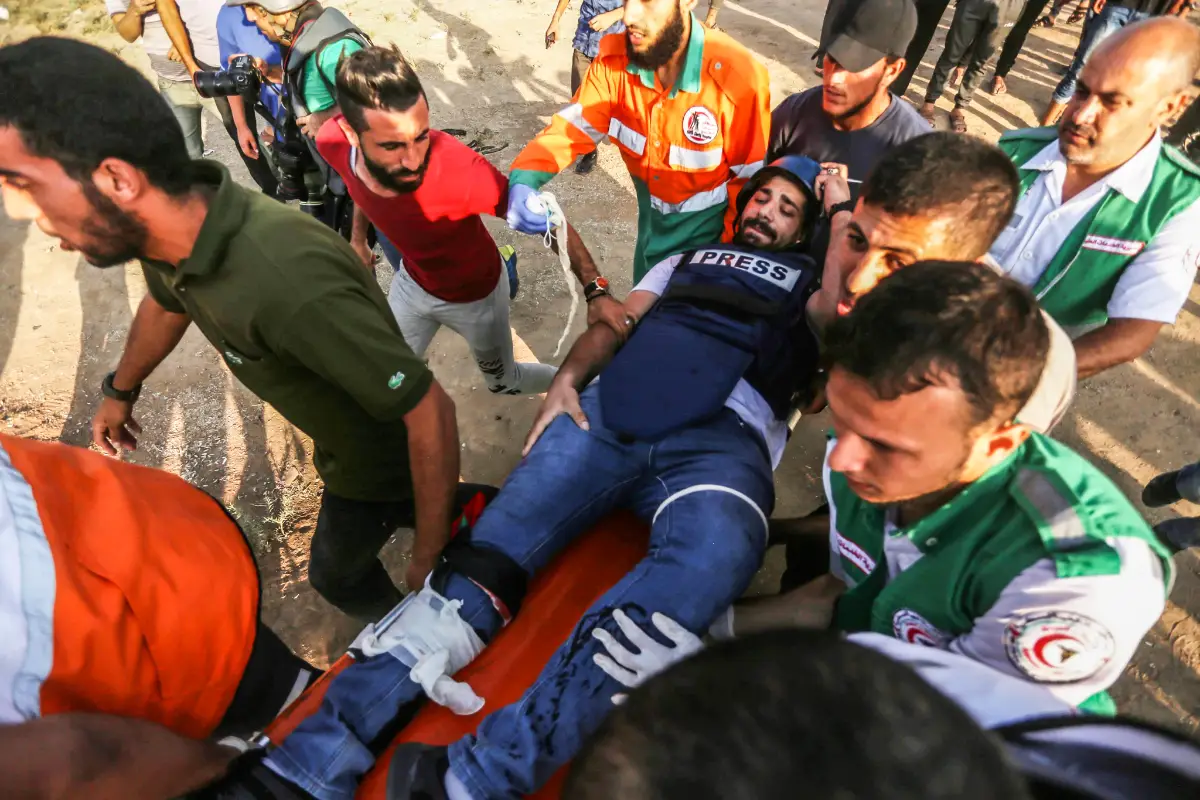
A: Working in Gaza means constantly making fast decisions under pressure, often without any sense of safety or calm. The events never truly stop, and over time experience becomes essential in learning how to react quickly while staying focused and aware of what is happening around you. During my work, I was injured six times by Israeli sniper fire while documenting events in Gaza. More than 260 journalists have also been killed while reporting there. These realities deeply shape the way we work in the field, where every moment can carry risk, but also a responsibility to continue documenting and preserving the truth.
Q: You captured this image with a Canon EOS 5D Mark IV and a 35mm focal length. What guided your choice of equipment and settings in this moment?
A: I chose the 35mm focal length because it allowed me to include both the people and the surrounding destruction within the same frame without losing the emotional connection to the scene. It created a balance between intimacy and context, which was important for this moment. The Canon EOS 5D Mark IV is also a camera I trust in fast and unpredictable conditions, especially when working under pressure. My focus in that moment was less about technical perfection and more about preserving the authenticity and emotional weight of the scene as truthfully as possible.
Q: The image balances sharp detail with a wide, complex scene. How did you manage exposure and focus while working quickly under pressure?
A: In moments like this, there is very little time to think technically. I relied mostly on experience, quick instinct, and natural light to keep the scene balanced and clear. My priority was to maintain focus on the worshippers while still preserving the details of the surrounding destruction, so the full emotional and visual context of the moment remained visible.
Q: Your work often centers on resilience and human dignity. How do you navigate the responsibility of representing people in such vulnerable circumstances?
A: I always try to photograph people with dignity and honesty, not simply as victims of war. Because I come from the same reality, I understand how sensitive and painful these moments can be. My responsibility is not only to document suffering, but also to preserve humanity, resilience, and identity within the image. I believe photography should give people a voice, not reduce them to tragedy.
Q: What motivated you to submit this photograph to Grid Photo Gallery, and how did you feel when it was selected as the winner?
A: I submitted this photograph because I felt it represented something essential about Gaza beyond destruction alone. The image carries grief, faith, displacement, and resilience within a single moment, and I believed its message could connect with people on a human level beyond politics or headlines. When it was selected as the winner, I felt deeply honored, not only personally, but because it meant that the story and humanity of people in Gaza had been seen and recognized through this image.
“I believe photography should give people a voice, not reduce them to tragedy.”
Q: As your work reaches global audiences through online exhibitions, how do you see photography contributing to awareness and understanding of the realities in Gaza?
A: I believe photography has the power to cross borders, language, and politics in a very direct human way. For many people around the world, images may be the closest connection they have to the reality in Gaza. Photography can preserve memory, challenge silence, and remind people that behind every headline there are human lives, families, fears, and hopes. Even a single image can create understanding and emotional connection in ways that words sometimes cannot.
Q: Finally, what advice would you give to emerging photographers who want to tell meaningful human stories, and what projects are you hoping to pursue next?
A: I would encourage emerging photographers to focus on honesty, patience, and human connection rather than only searching for dramatic images. Meaningful storytelling comes from empathy and understanding the lives of the people you photograph. I believe the most powerful images are the ones that carry truth and emotional depth. As for the future, I hope to continue working on long-term visual projects that document memory, displacement, survival, and everyday human resilience in Gaza, while bringing these stories to wider international audiences through exhibitions and visual storytelling platforms.
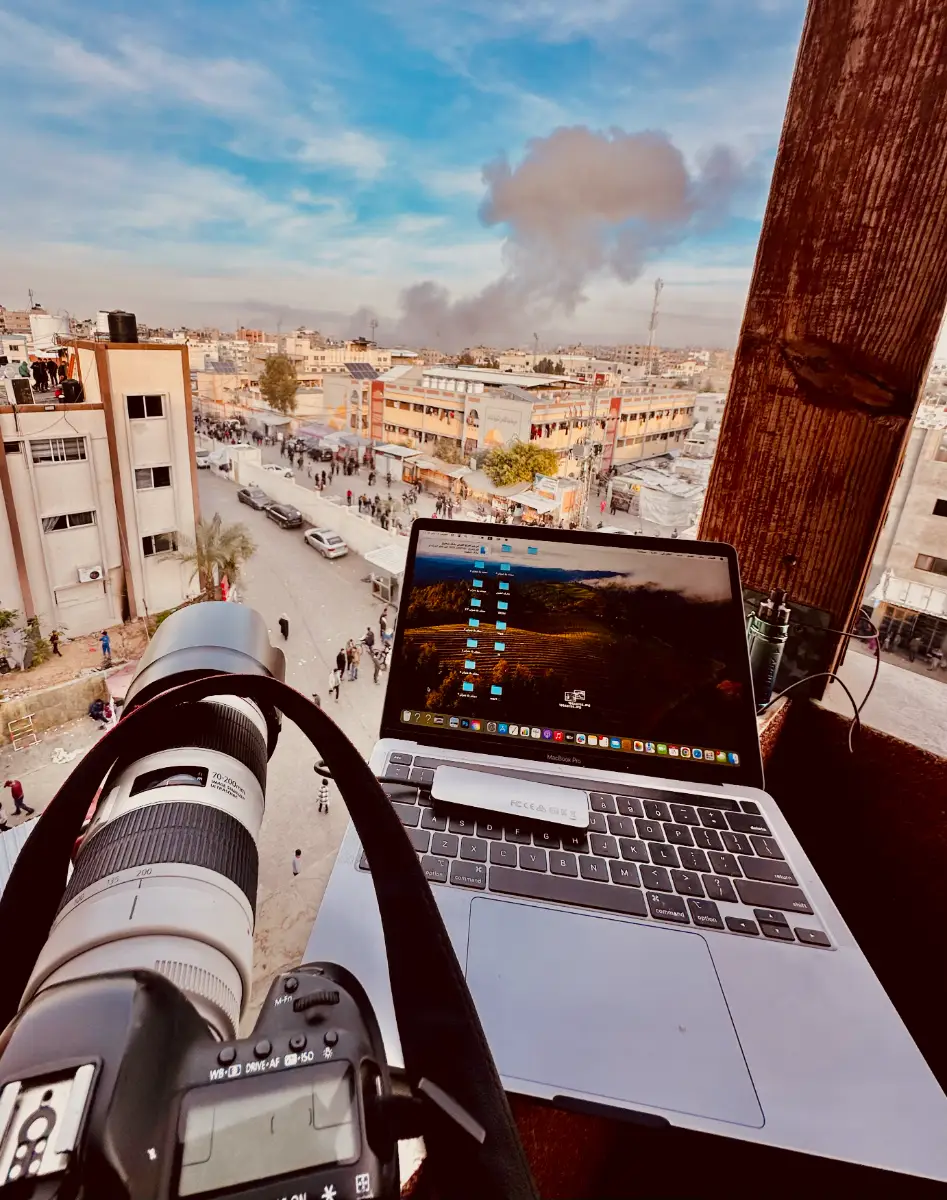
Some photographs by Abdelrahman Alkahlout

Abdelrahman Alkahlout (3) comp with Fewerpix Abdelrahman Alkahlout (2) comp with Fewerpix Abdelrahman Alkahlout (1) comp with Fewerpix