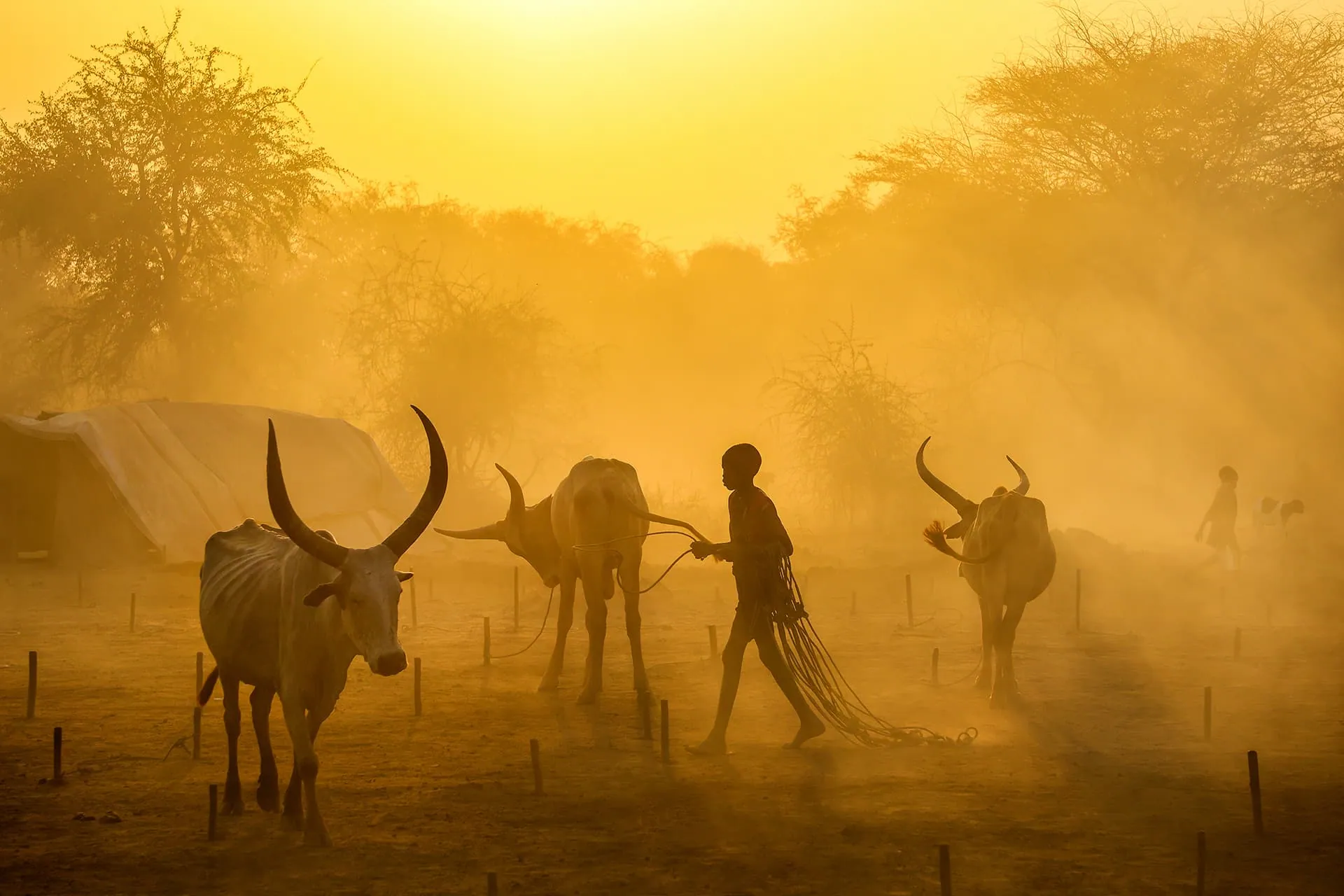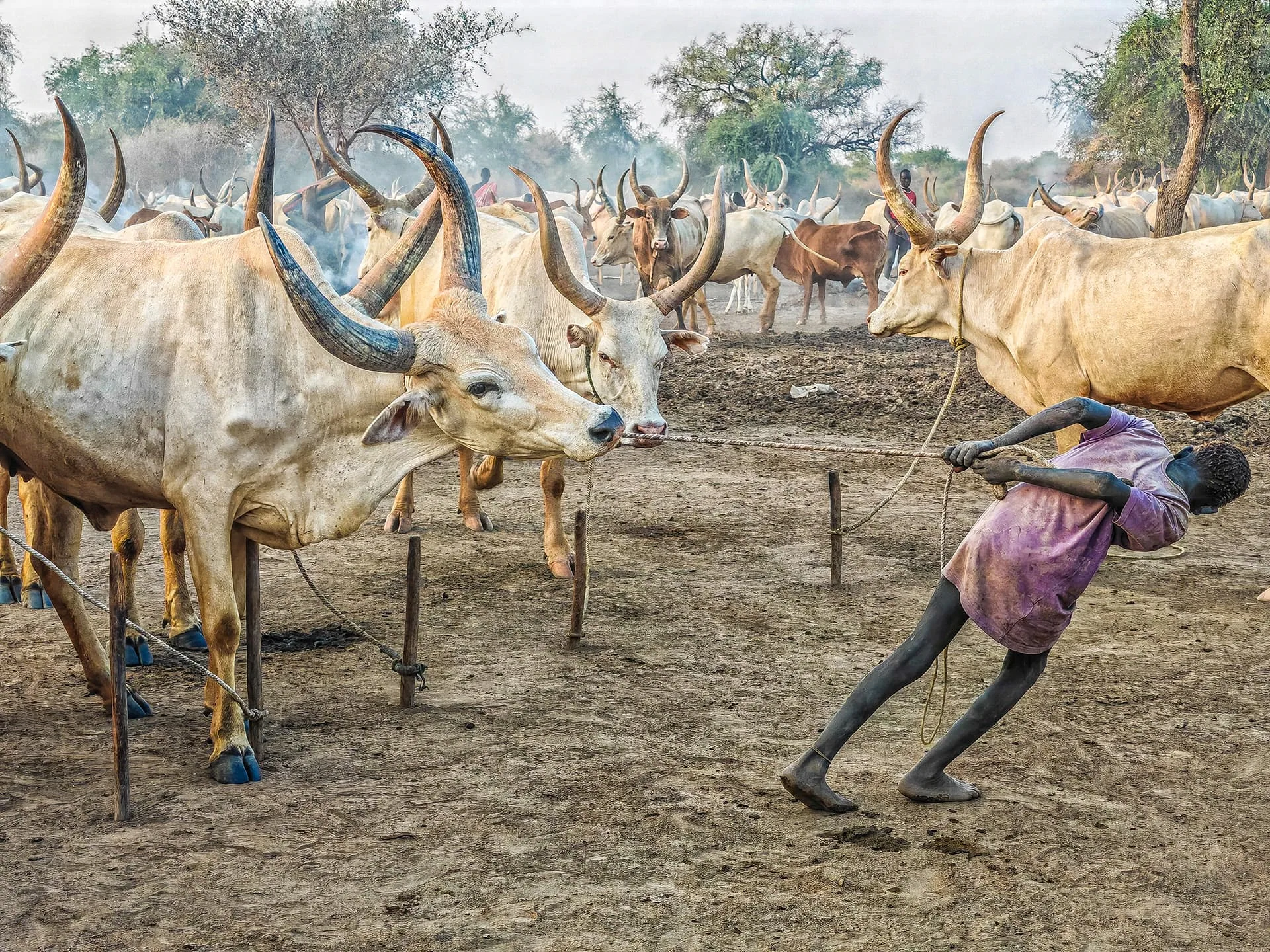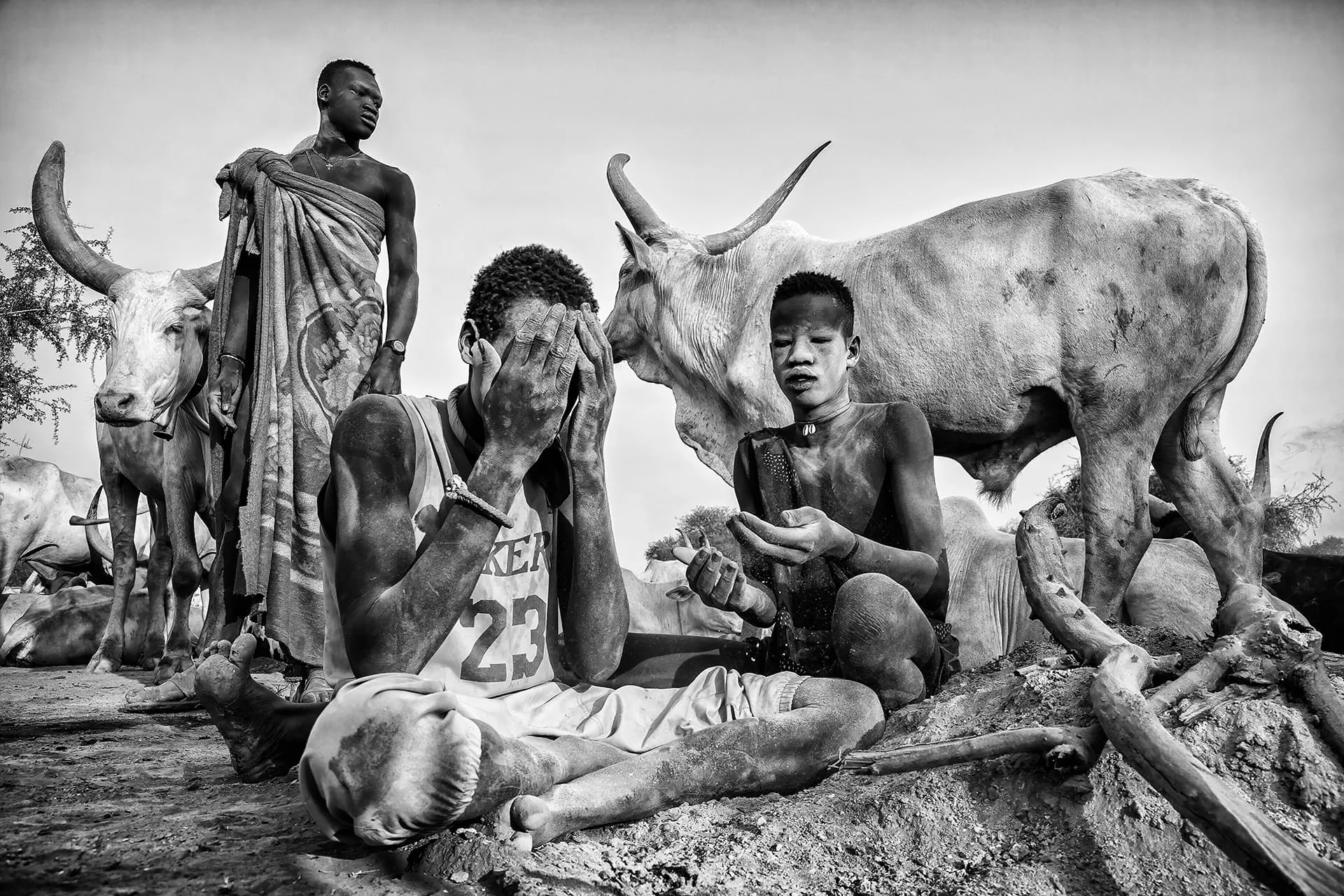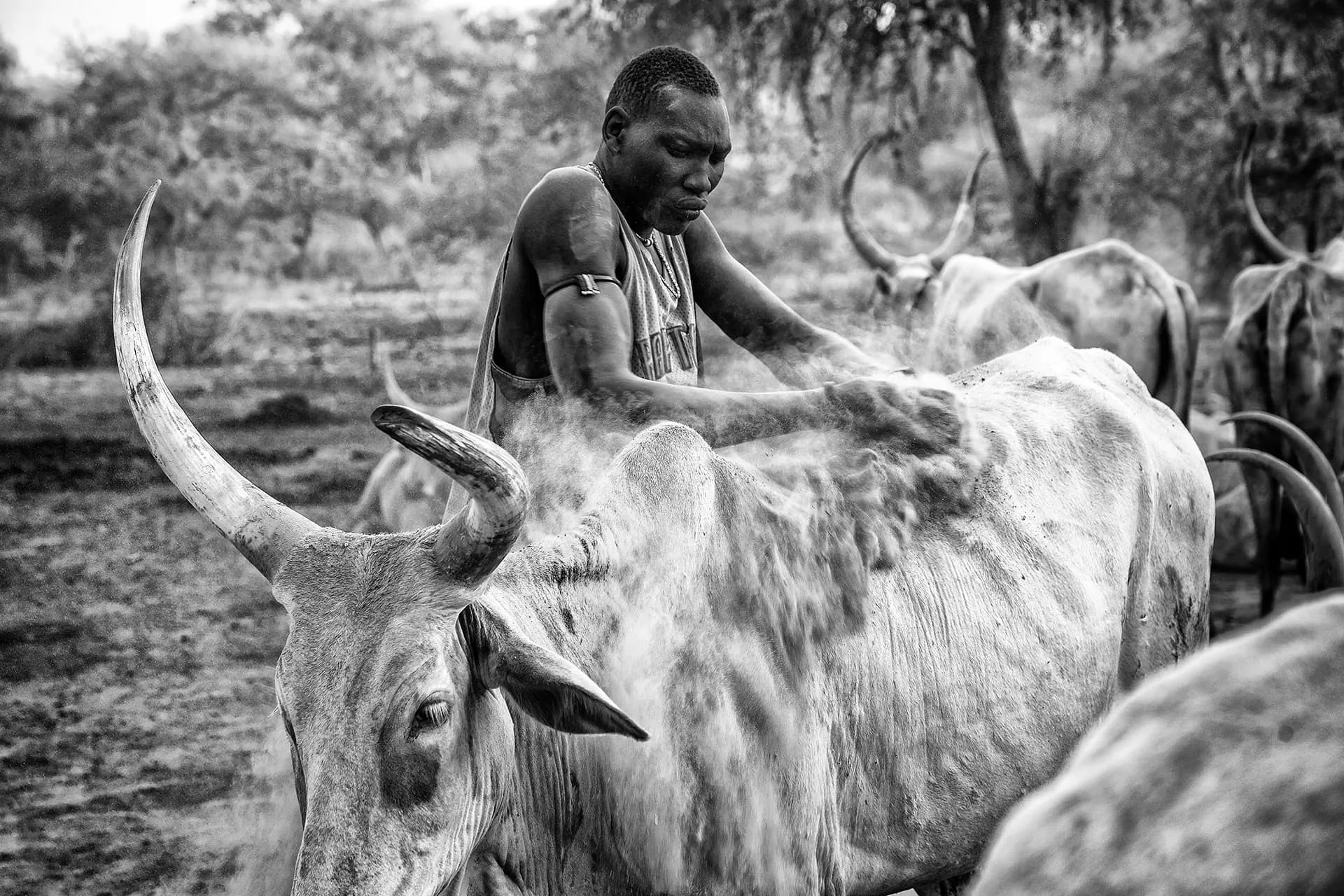
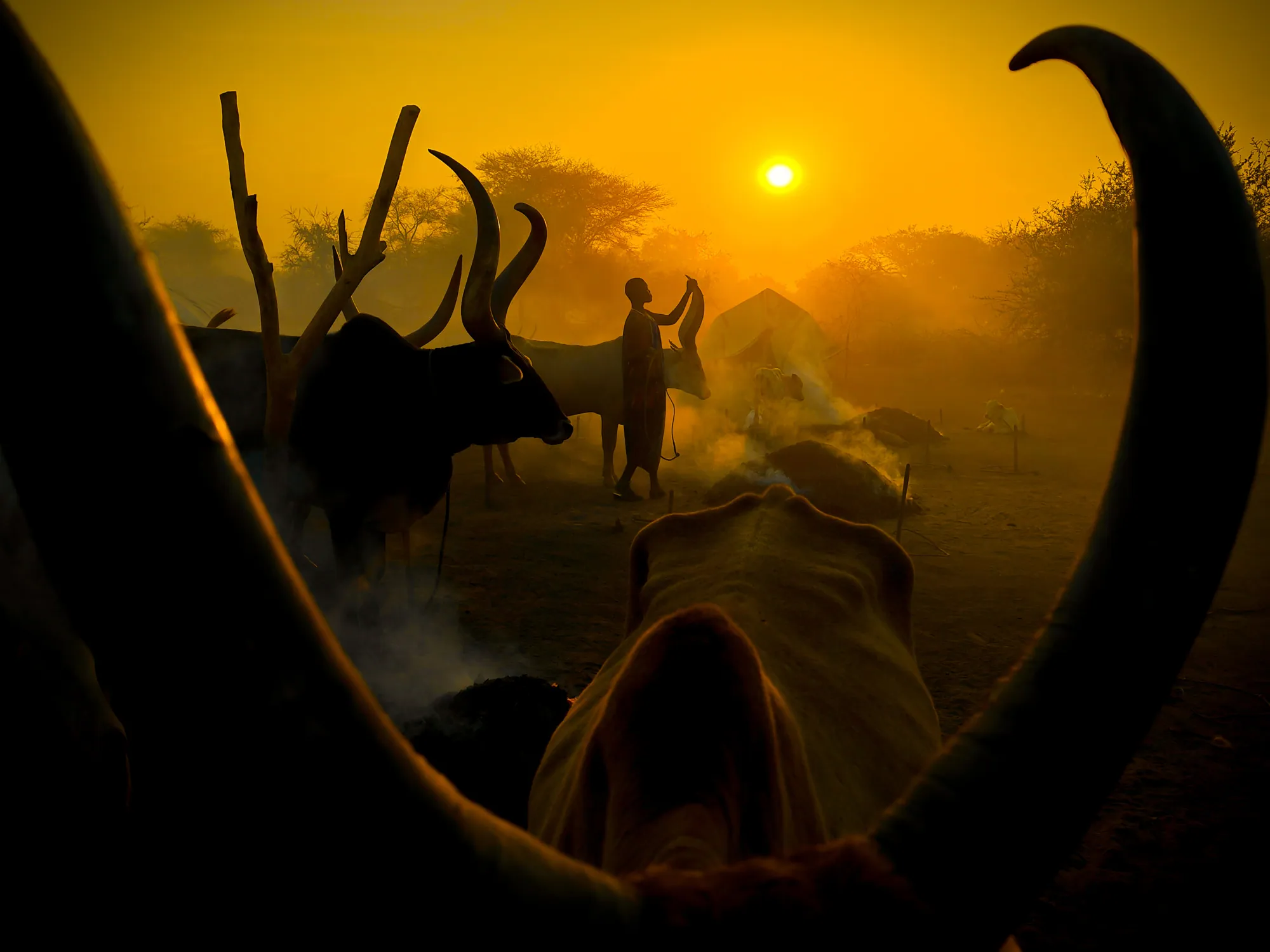
Jurica Galic’s photograph Back to the Past was awarded Grid Photo Gallery’s first-ever Photography of the Year, emerging as the standout image among both international submissions and the top winners from each contest held during the gallery’s inaugural year. Taken in a Mundari cattle camp in South Sudan, the photograph captures a fleeting yet timeless moment where human presence, animal life, smoke, and fading light converge into a scene that feels both documentary and mythic.
Selected for its immersive composition, atmospheric depth, and the quiet dignity it conveys, the image reflects a way of life shaped by ritual, environment, and daily care. In this interview, Jurica speaks with us about the story behind Back to the Past, his approach to visual storytelling, and the path that led him to this singular moment.
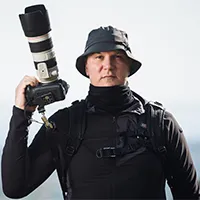
Q: Jurica, congratulations on winning Grid Photo Gallery’s inaugural Photography of the Year. To start, could you tell us a little about yourself and how photography became part of your life?
A: Thank you very much. I am a freelance documentary photographer from Split, Croatia, where I was born in 1976. For the past ten years I have been a contributor to the Croatian magazine Meridijani, often described as the “Croatian National Geographic”. But my works were also published in the real National Geographic Croatia, as well as in numerous international media such as The Guardian, Place2Go, Adriatic Travel, Travel Magazine and others… I have been working professionally in photography for the past 14 years. During that time, I have received more than 200 international awards and recognitions, held 15 solo exhibitions, and was honored with Croatia’s highest lifetime photography award, the “Tošo Dabac,” presented for exceptional contributions to the field.
“A perfect moment rarely waits.”
Q: Back to the Past was photographed in a Mundari cattle camp in South Sudan. What initially drew you to this place and to the daily life unfolding there?
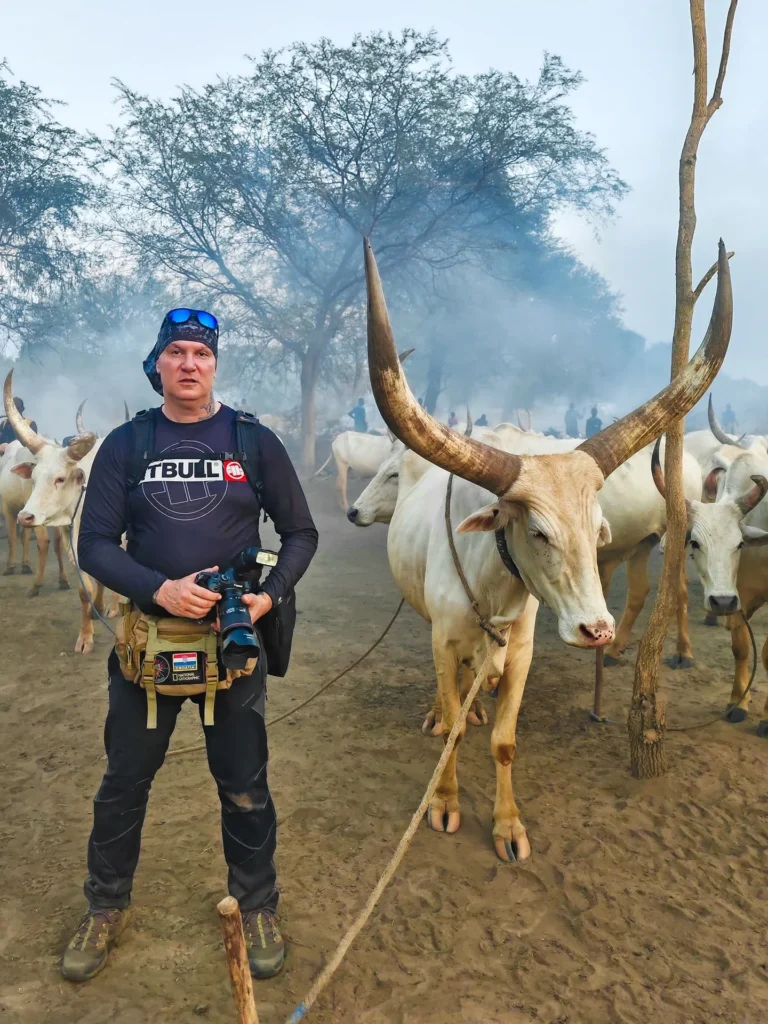
A: The world has become a global village. I have traveled to more than 80 countries—some of them four or five times—because I do not collect country numbers, but experiences and testimonies of a world that is slowly disappearing. South Sudan was one of those destinations. I was already familiar with the traditions of the Mundari people, and I traveled there with the intention of documenting this fascinating community in my own way and for my own audience.
Q: The image feels immersive, as though the viewer is standing inside the herd itself. How did you think about perspective and framing while composing the photograph?
A: What makes this photograph particularly interesting is that the moment found me with only a smartphone in my pocket. It was my ninth day in the field without electricity, and I had completely exhausted all the batteries for my Canon R6 Mark II—eight batteries in total—as well as four power banks. Although I had already captured strong images in the Mundari cattle camp, this moment felt truly special. Through the horns of the bull in front of me, a beautiful scene appeared: a man decorating the horns of an Ankole cow with red clay, a breed known for its enormous horns. At that point, I had to decide whether to walk back to my tent—about fifty meters away—to recharge a battery on my solar charger, or to photograph the scene with my phone. I chose the phone, and I did not regret it. A perfect moment rarely waits.
Q: At the center of the scene, we see a Mundari man carefully decorating the horns of a cow. What did this quiet interaction represent to you at the moment you pressed the shutter?
A: Through the horns of the first cow, I could clearly see a man carefully and traditionally decorating his animal, exactly as his ancestors had done for hundreds of years. For me, it felt like looking directly into the past. That is why I titled the photograph Back to the Past.
Q: Smoke and backlight play a crucial role in shaping the atmosphere. How did the changing light and drifting smoke influence your timing and creative decisions?
A: Smoke and backlighting played a crucial role in creating the atmosphere of the image. Every evening at sunset, the Mundari burn dried cow dung to protect themselves from mosquitoes. The smoke, combined with the light of the setting sun, created a magical photographic backdrop that gave the image its power and emotional depth.
Q: The photograph balances documentary truth with a sense of visual poetry. How do you navigate that line when photographing real people and cultural practices?
A: I always try to photograph documentary stories in my own way, weaving my personality and artistic expression into them. I firmly believe that documentary photography and art can coexist. Truth does not exclude poetry.
Q: You captured this image using a smartphone camera. How did working with this tool shape your approach, both technically and in terms of how you engaged with the scene?
A: As I mentioned earlier, I found myself in that situation unexpectedly, with only my phone in my pocket. Once I recognized the importance of the moment, I focused on extracting the maximum possible quality from the smartphone in order to create the strongest image I could.
Q: With strong silhouettes and intense backlighting, exposure becomes critical. What considerations guided your technical choices in such a high-contrast environment?
A: My main concern was achieving the right balance between the silhouettes and the intense light of the setting sun. That balance, together with the human–animal interaction captured at the decisive moment, was the most important technical and emotional element of the photograph.
Q: This competition brought together not only new submissions but also the best images from every Grid Photo Gallery contest of the year. What motivated you to enter Photography of the Year?
A: I regularly participate in photography competitions around the world, and the very title “Photography of the Year” was a strong enough reason for me to enter your contest. I trusted my instinct—and it turned out to be the right decision.
Q: How did it feel to learn that your image had been selected as the overall winner of Grid Photo Gallery’s very first year?
A: I was truly delighted when you informed me that one of the best photographs of my career had been selected as the overall winner of the Grid Photo Gallery competition. I am very proud of this achievement, and I am certain this will not be my last time participating. I will definitely apply again when the theme feels right for me.
“Truth does not exclude poetry.”
Q: The exhibition exists entirely online, reaching viewers across the world. What are your thoughts on presenting culturally specific stories within a virtual gallery space?
A: I have previous experience with digital exhibitions, and I believe they are an excellent way to increase visibility. I was born in the analog era and still love the smell of printed paper, but I also fully accept that we live in a digital world. I embrace the advantages of modern technology and promotion, and for that reason, I strongly support virtual exhibitions.
Q: Looking ahead, what advice would you offer emerging photographers interested in environmental and human-centered storytelling, and what projects are you hoping to pursue next?
A: My advice to young photographers is to stay true to themselves, remain original, and follow their own vision. Artificial intelligence will not kill photography—only the lack of creativity. As for my future plans, I intend to continue traveling the world, giving lectures, producing documentary films, writing for magazines and my own books, and earning the highest honorary titles within international artistic organizations such as FIAP. In short—continuing to live my dream.